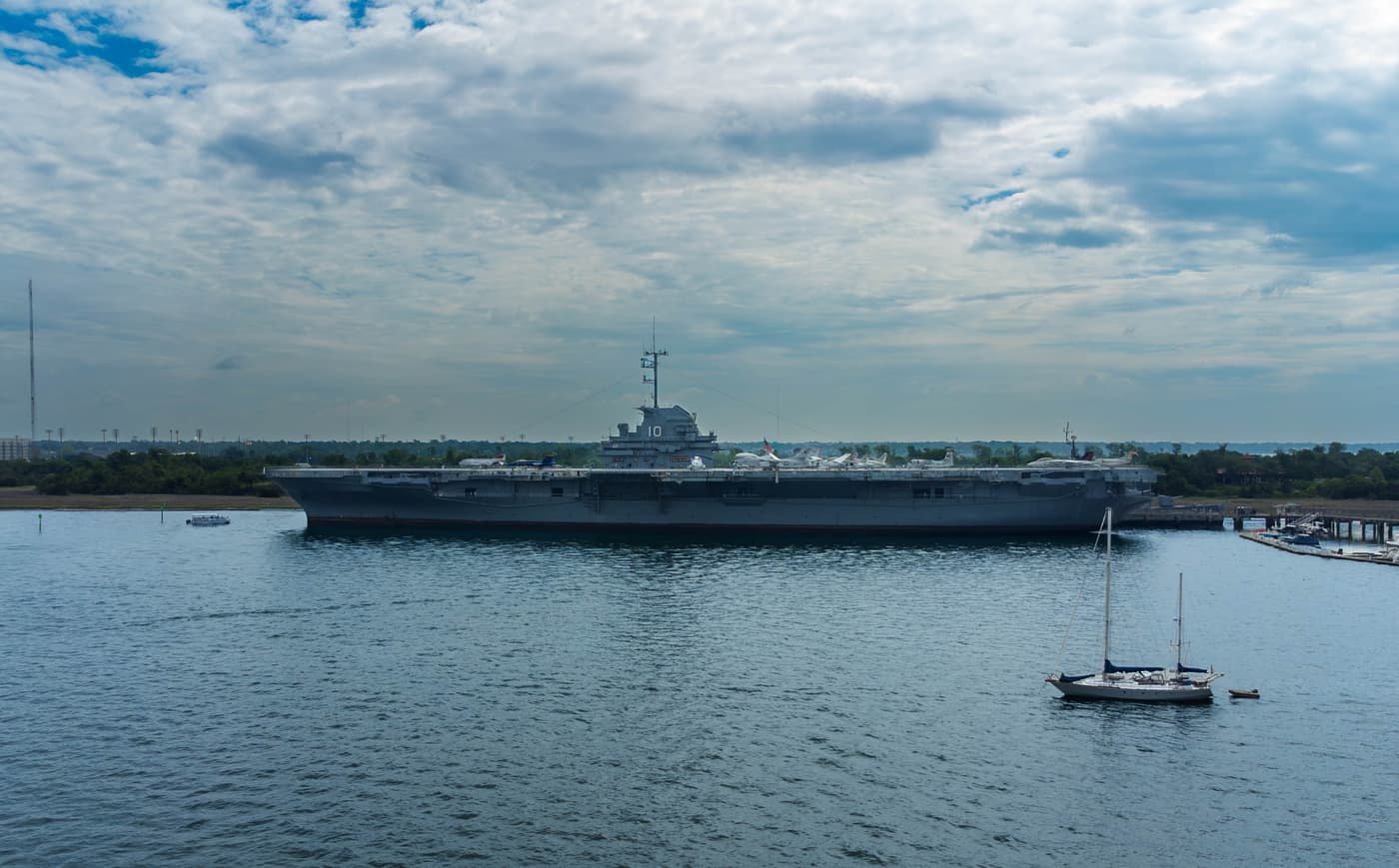
The Fighting Lady
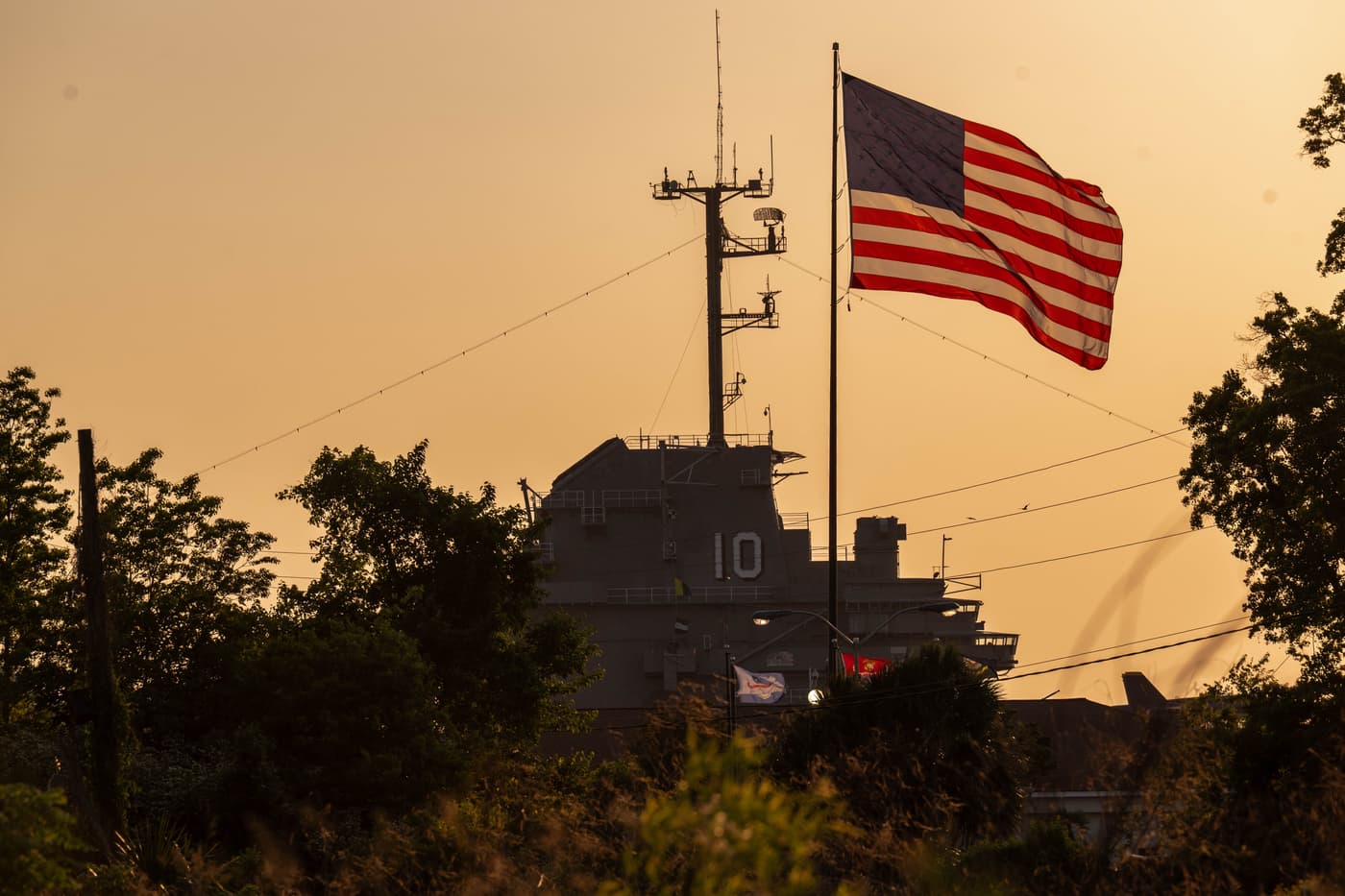
USS Yorktown is the second American warship to bear the name. The first — CV-5, namesake of the Battle of Yorktown — was lost at the Battle of Midway in June 1942, sunk by a Japanese submarine while limping home with damage from the fight that broke the back of Japanese naval aviation. Within days of her loss, the Navy ordered the next Essex-class carrier under construction at Newport News Shipbuilding renamed in her honor. CV-10 was commissioned on April 15, 1943, and by the time she sailed for the Pacific six months later the United States had essentially traded one Yorktown for another. The second carried the first into every battle she fought.
She fought the next two years across nearly every major Pacific operation — the Marshalls, Truk, the Marianas, Iwo Jima, Okinawa, the Tokyo strikes — eleven battle stars and a Presidential Unit Citation by V-J Day. A Navy documentary crew lived aboard her for much of 1944 and shot what became The Fighting Lady, the first color combat film an American audience had ever seen and still one of the finest war documentaries ever made. The carrier in the film is the Yorktown. The pilots launching from her flight deck, working her hangar bays, smoking on her catwalks — many of them never came home, and the film knows it. After the war she was decommissioned, then recommissioned in 1953 as an antisubmarine carrier, served two tours in Vietnam, and recovered the Apollo 8 crew when they returned from the first crewed flight to the Moon in December 1968.
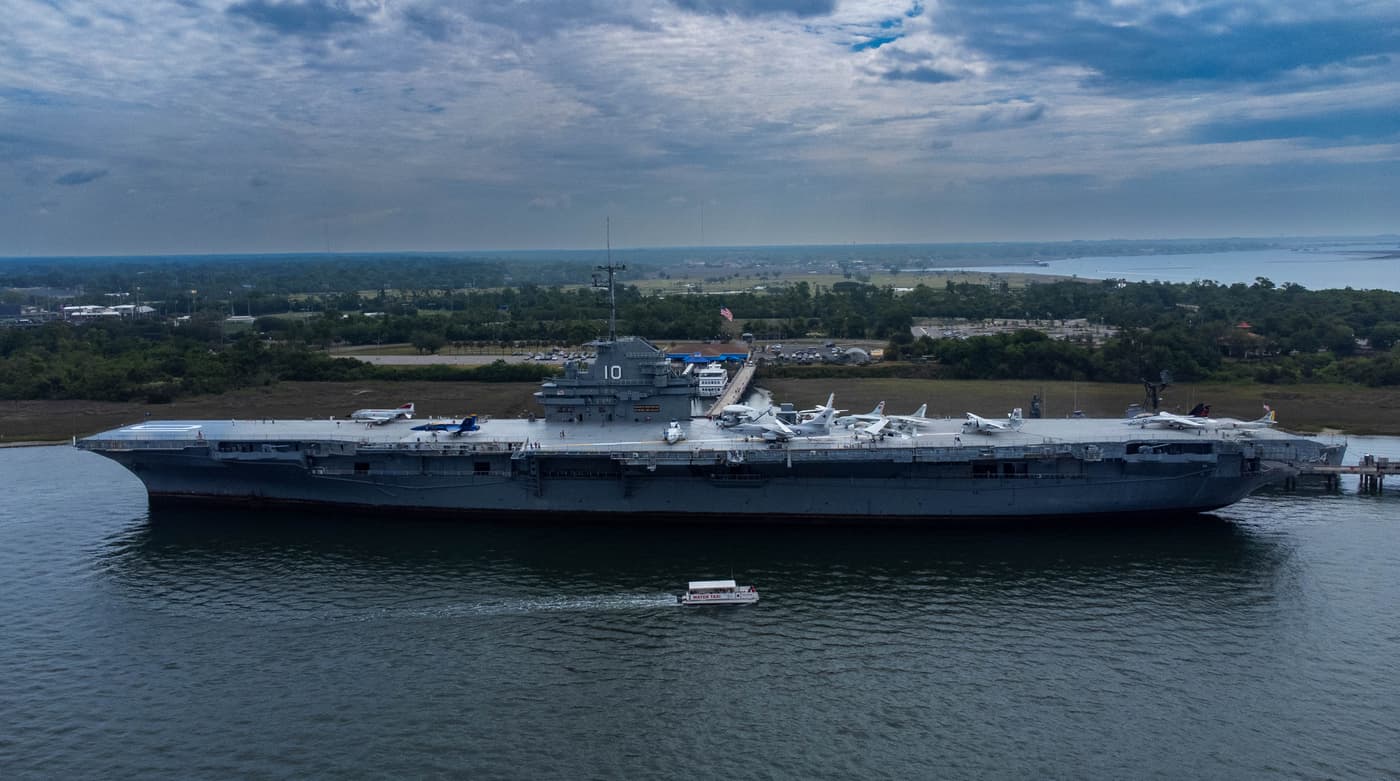
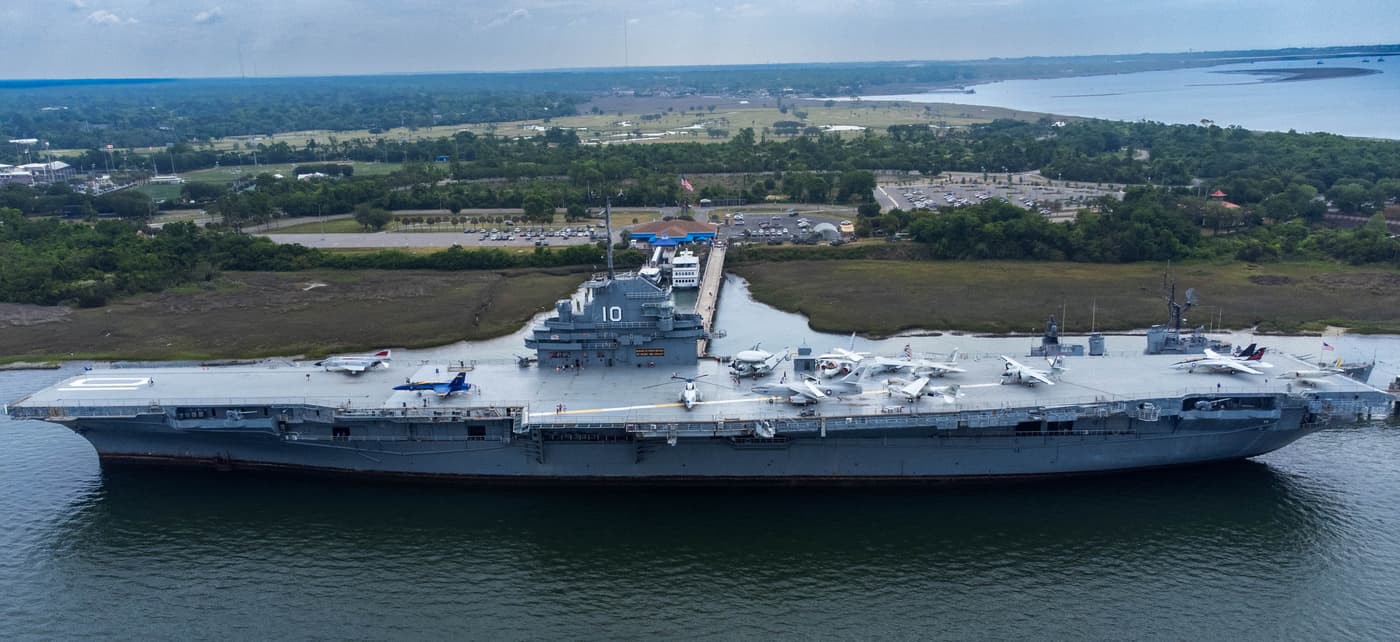
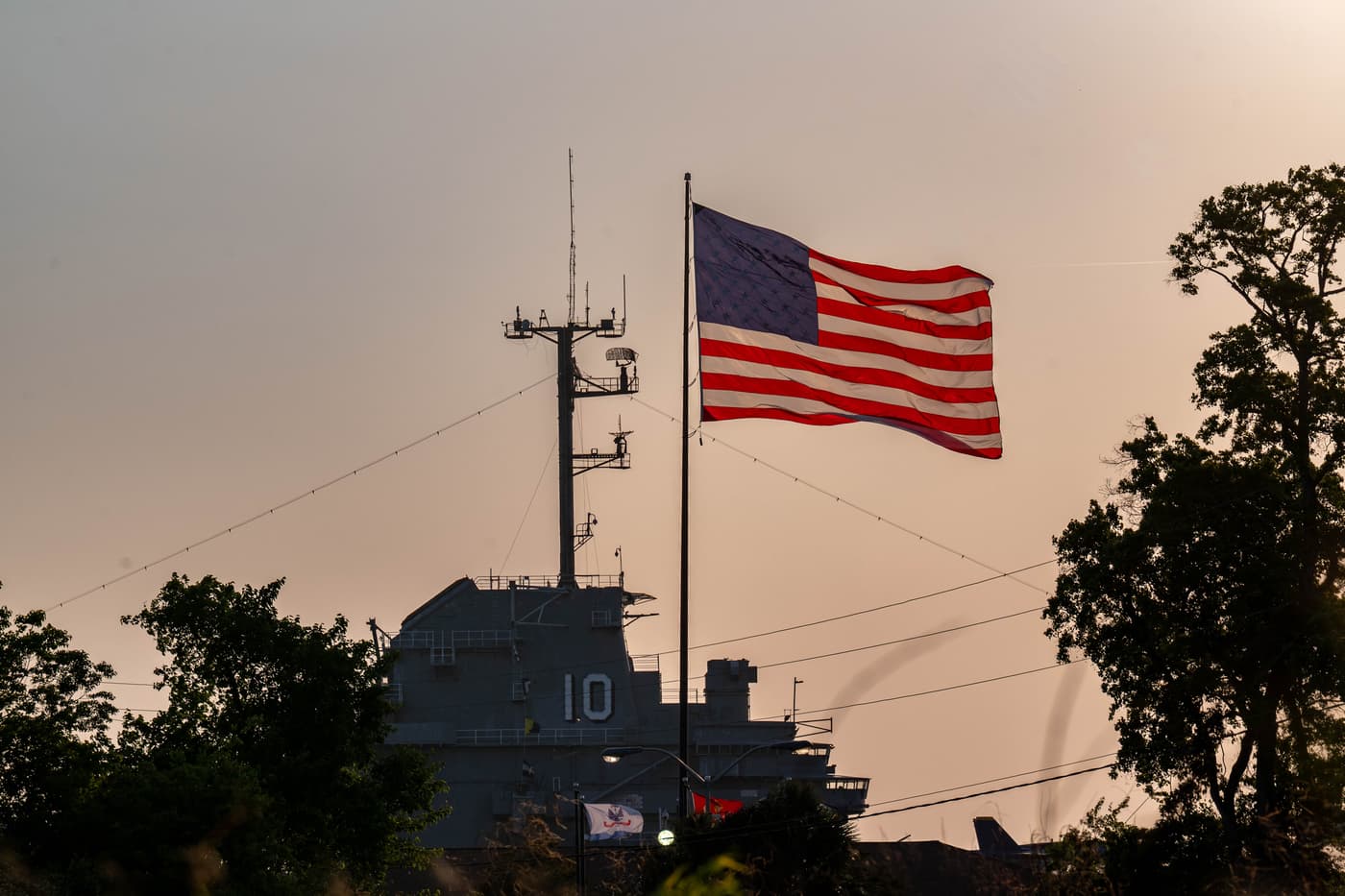
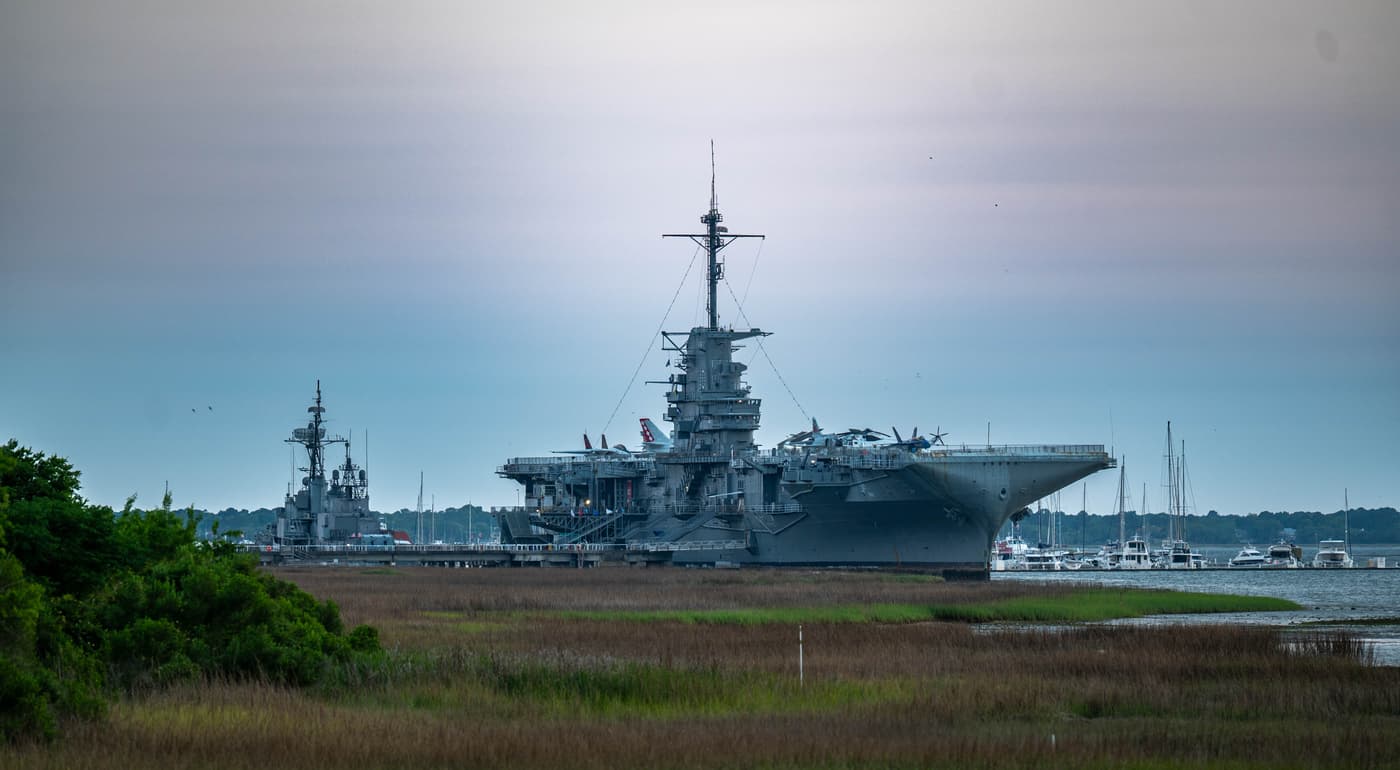
She has been moored at Patriots Point in Mount Pleasant, South Carolina since 1975 — sixty acres of pier and ship across the Cooper River from the Charleston peninsula. Visitors climb the eight decks of her island, walk the catwalks where the cameramen worked, stand on the flight deck under the parked silhouettes of an F-14 Tomcat and a TBM Avenger, and step down into the hangar bays where the planes are still arranged as if the air boss expects them spotted for launch. From the bow you can see the Ravenel Bridge curving across the river toward Charleston, and beyond it Fort Sumter, Sullivan's Island, and the open Atlantic. Eight hundred and seventy-two feet of warship, kept in place by spring lines and history.
Gallery
Petals, Tides, & Tunes
The Yorktown sits across the harbor from Charleston — a stop on the Atlantic coast leg of a 36-day road trip chasing spring south and music north. See the full journey.
View Full Journey